Thermodynamics
Air Cooling vs Immersion Cooling for Bitcoin Mining: 2026 Guide
Air cooling is cheaper to start; immersion cooling cuts temperatures 20-30°C and unlocks 25-35% overclocking. A practical 2026 comparison of costs, maintenance, and when each wins.
#Immersion #Hydro
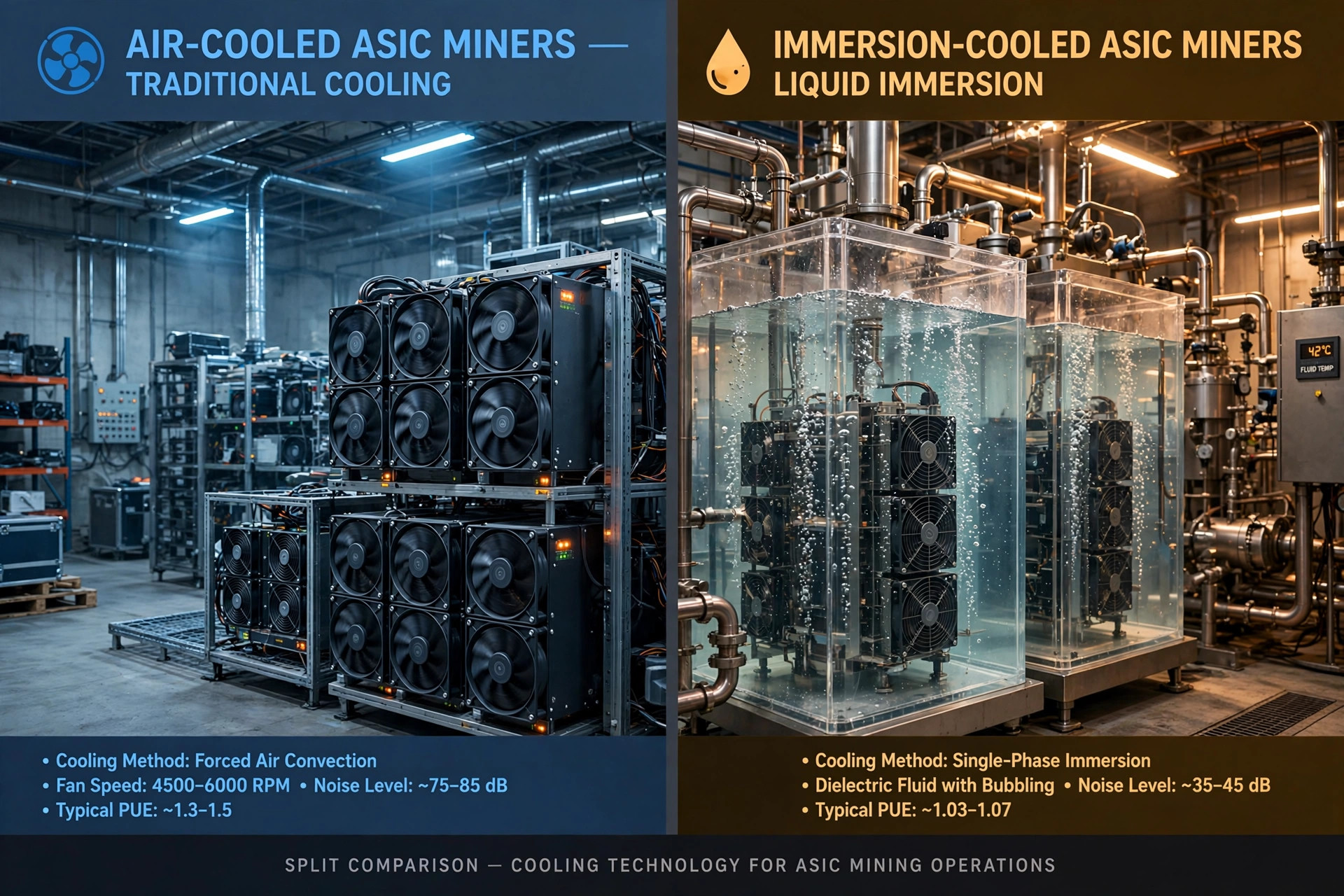
The air cooling vs immersion cooling debate is the most important infrastructure decision a miner makes in 2026. Here is how they compare.
Air Cooling: The default for most farms. Lower upfront cost — no tanks, no fluid, no plumbing. A 40ft air-cooled container ($46,000 for 1.5 MW) gets you running fastest. Downsides: fan noise (75+ dB), dust ingress degrading hashboards, and thermal throttling in hot climates. Air-cooled miners like the Antminer S21 Pro and Whatsminer M60S series are workhorses, but they leave efficiency on the table.
Immersion Cooling: Submerging miners in dielectric fluid (MineForgeX ForgeTank systems run $2,190 for 2-slot up to $14,800 for the 24-slot enterprise tank) eliminates fans entirely — zero dust, near-silent operation, and junction temperatures 20-30°C lower than air. That thermal headroom unlocks 25-35% sustained overclocking without chip degradation. Fluid maintenance (5-micron filtration, periodic top-ups) is the main ongoing cost.
Direct-to-Chip Hydro (the middle path): Miners like the Antminer S21 XP Hydro ($8,450) and S23 Hyd ($13,300) route liquid across cold plates — simpler plumbing than full immersion, with 60-70°C outlet water usable for heating.
Verdict: Under 50 units in a cool climate, air cooling wins on simplicity. Above 100 units or in hot regions, immersion or hydro pays for itself through density, overclocking, and eliminated fan failures.
Discuss this with the MineForgeX team
Questions about the hardware, cooling, or deployment in this article? Request a quote for your facility.
Consult Team →